The need for change
Whether we’re reading or listening to the latest news about climate change, about the state of affairs in respect to the amount of carbon dioxide (CO2 ) emitted into the atmosphere by our production systems, the waste, whether plastic or otherwise that seeps into the oceans and other waterways and onto and into the land, and so on, the message appears to be the same. We are running out of time. We’re not doing enough. While the general rhetoric still maintains that we need to do everything possible to keep our climate below the 1.5C above pre-industrial level, evidence exists to suggest that we have already exceeded this point, and in fact, that we reached 1.7C above pre-industrial levels back in 2017 (1).
Irrespective of the accuracy of the above cited research, which coincidentally was published in one of the best and well-respected Earth Science Journals, what it is indirectly telling us is that while through our sustainability actions we may be making some progress to quash detrimental Earth impacts in some areas, whatever progress we are making, it’s not enough. The net position is that we’re still going backwards.
As I’ve argued elsewhere, and make no apologies for repeating myself here, if sustainability is understood to be about minimising the negative impacts of human behaviour on the planet, then simply reducing the level of negative impact doesn’t go far enough. Let’s face it, negative impact is still negative impact. It still includes detrimental consequences for the planet and for society. Literally, the only thing that changes is the time-frame. And so, at the very least, we need ‘NO negative impacts’ from our behaviour. Better still, would be if we were able to redress the damage already done. The good news, time permitting, is that we can.
What change looks like
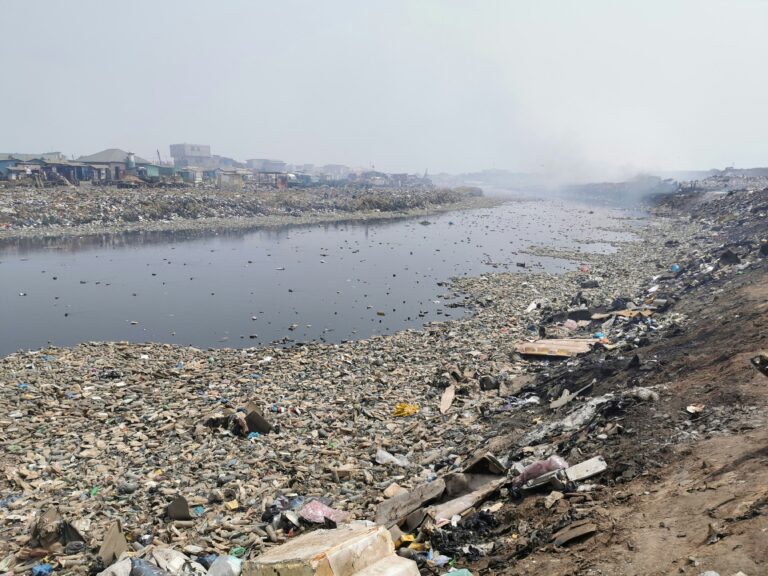
We could for example, clean up our oceans and waterways of plastic waste. This wouldn’t be easy though. According to the UN Environment Program, “every day, the equivalent of 2,000 garbage trucks full of plastic are dumped into the world’s oceans, rivers, and lakes. This amounts to 19-23 million tonnes of plastic waste polluting our oceans, lakes and rivers every year”.
We could also remove carbon dioxide (CO2) from the atmosphere. Referred to elsewhere as CDR (carbon dioxide removal). Closely related is carbon sequestration, which can be of a biological, geological or technological kind, and refers specifically to the storage of removed CO2. Afforestation, the planting of trees over large areas, is an example of a way to remove CO2 from the atmosphere. Some trees naturally sequester carbon dioxide, storing it in their trunks, branches, bark and leaves as well as the understory, the soil.
There are ways that businesses and organisations can assist. These will be documented in this blog over time. For now, think of the above activities as being about restoration. Both examples are restorative. They are about restoring damaged waterways – waterways suffering from ill health – and returning other land masses too back to an original healthier state. I argue that once an entity is at a healthy level, it is naturally better able to self-manage wellbeing, from its own side, that is, inherently. In other words, it can regenerate itself. Note that regeneration is self-initiated, it occurs from within the entity in question, whether it be an ocean, a forest, an organisation or even an individual like you or I for that matter.
How are regenerative businesses different from sustainable businesses?
And so, if we expand on the above explanation further, and return to a business context, whereas on the one hand a sustainable business would be doing what they can to reduce the negative impacts of their business activities i.e., by reducing their waste output and carbon emissions etc. – which is not a bad thing to do, don’t get me wrong – a regenerative business on the other hand would be creating not only no negative impacts as a consequence of their business activities, but moreover, a regenerative business would be operating in a way that is about maximising its positive impacts on the natural environment and on society. In other words, simply put, a regenerative business would be making the world a better place.
Can sustainable businesses become regenerative businesses?
Yes, is the simple answer to this question. Likely though they would first need to carry out a large-scale assessment of the impact of their business activities across all functional areas to identify appropriate areas for transformation. A big task, yes. However, the good news is that transformation is possible, and indeed, a necessity. In fact, I will stick my neck out here and argue, that in an ideal future world, there will be no place for non-regenerative businesses.
Areas of business suitable for change
There are some areas of business arguably more open to transformation than others. An elaboration on this here is beyond the scope of this post, and so you can expect to read more on this in Part 2 of ‘What is a regenerative business’.
References
- McCulloch, M. T., Winter, A., Sherman, C. E., & Trotter, J. A. (2024a). 300 years of sclerosponge thermometry shows global warming has exceeded 1.5 C. Nature Climate Change, 14(2), 171-177.